
De-Escalation
Public field video. SafeWrap is used to hold and de-escalate, then finish with lateral handcuffing.
Field applications
These public films show de-escalation, the lateral position, the descent, a switch, and handcuffing from the side.
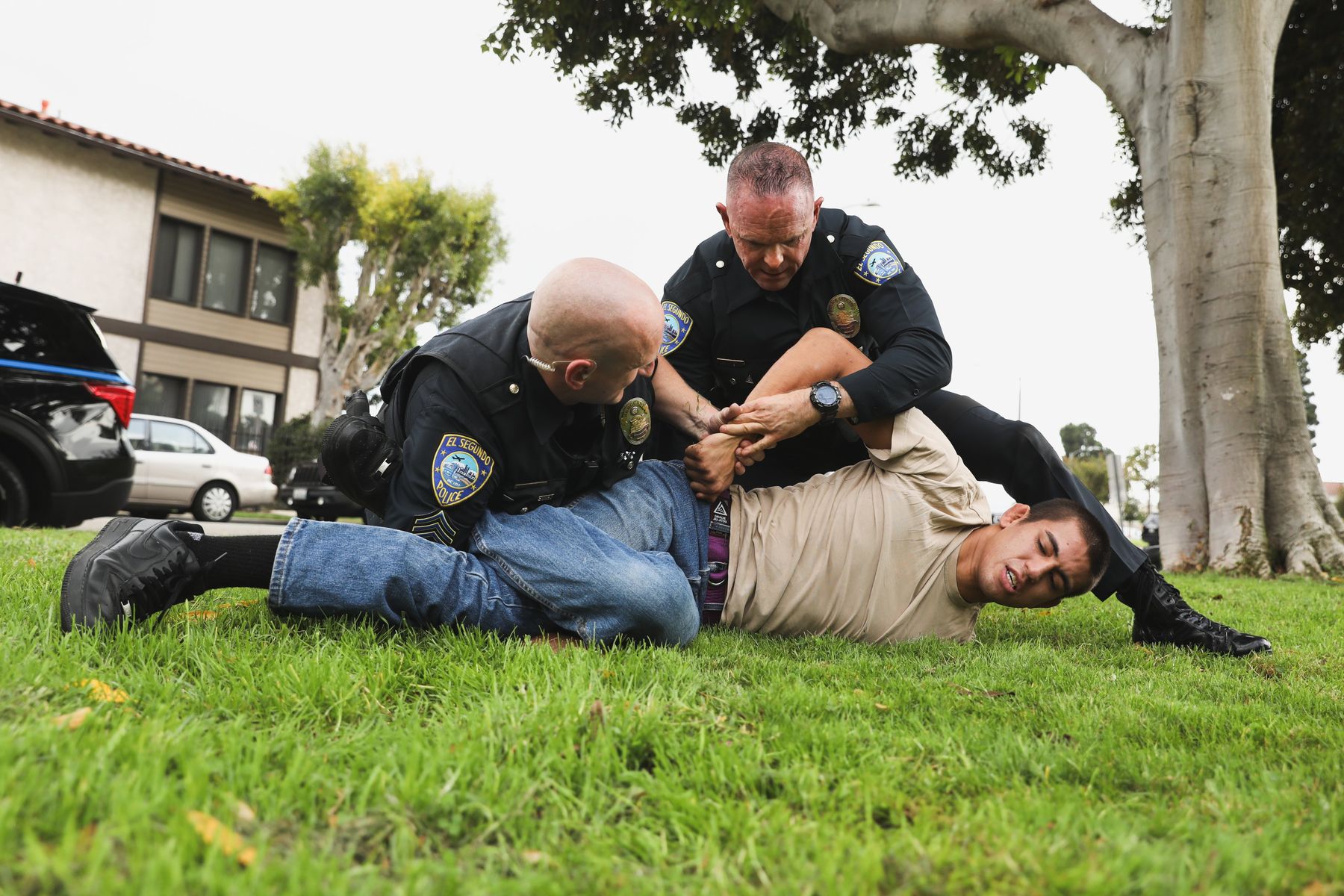
Public field video. SafeWrap is used to hold and de-escalate, then finish with lateral handcuffing.
Public field video. Officers transition a resisting person into SafeWrap and handcuff on the side.
Public system film covering SafeDown, the lateral position, entries, and solo survival.
Public training film from a juvenile setting, including a SafeSwitch while control stays in place.
Public demonstration of why handcuffing does not have to start with a prone finish.
Public field video. SafeWrap used during an arrest. No serious injuries reported in the account of the incident.
Additional entries and restraints, tailored to your requirements. The core stays the same. What gets added is matched to the rooms you work in and the people you have to hold.
When someone is already face-down, the entry rotates them into the supine position instead of stacking weight on the back.
When the person is curled and protecting, this entry flips the turtle on its shell to the supine position.
Safely step into a fight or entanglement that is already underway, separate, de-escalate, and move it toward lateral control.
Start from a chair or a seated person and still finish in the lateral system.
When more restraint is required, add it with enough people to do it safely. Not a pile-on.
Move to a chair while the position, the face, and the airway stay accounted for.
Leg control for movement and transport, without giving the upper body back.
One person holds distance and early control until a second person arrives.
If these applications match the encounters your people actually have, request a conversation and we will map the certification path.