
The solution
SafeWrap puts the three conditions in place early.
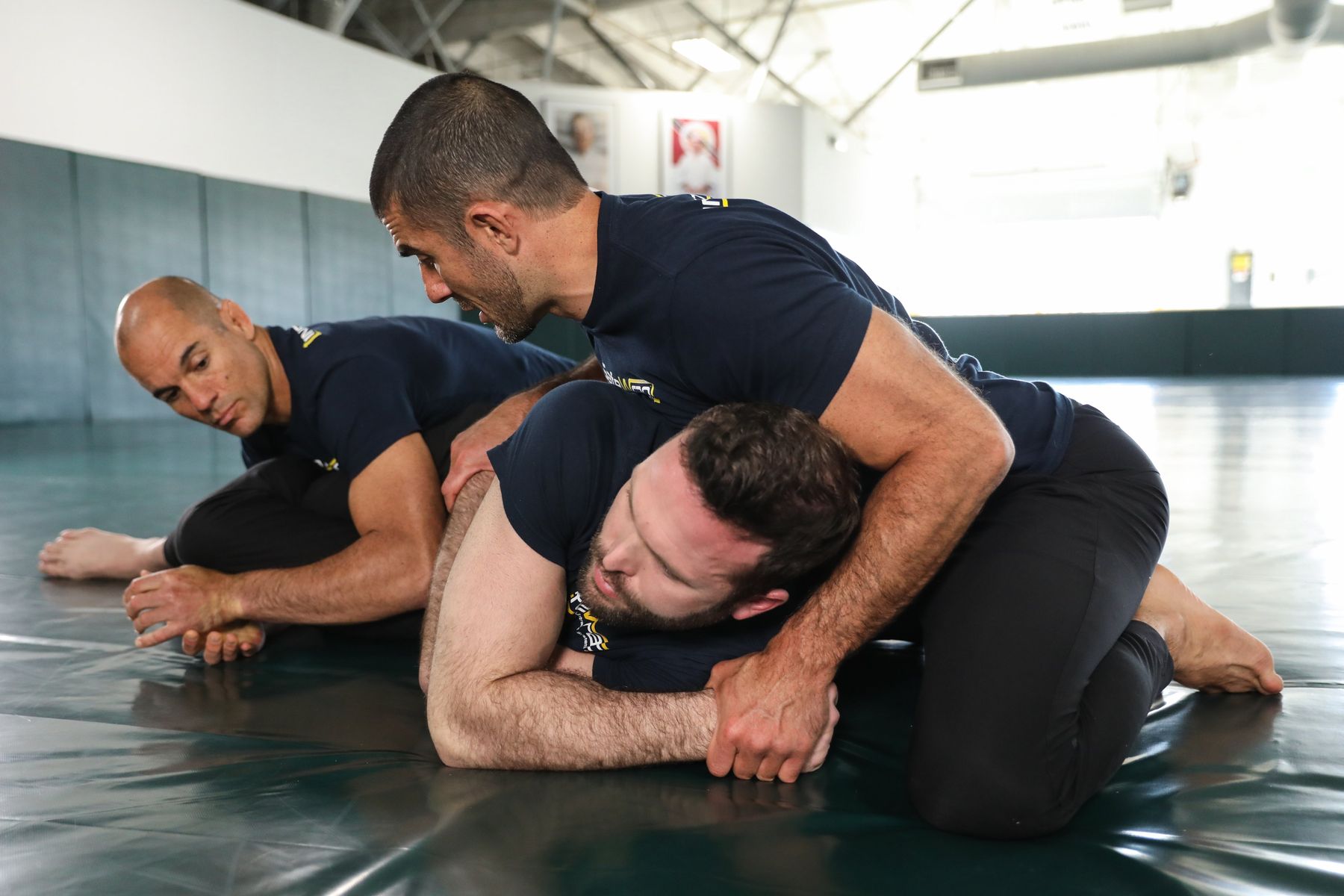
SafeWrap is the lateral restraint system developed by Gracie University. It maximizes physical control and reduces injury risk to everyone involved. CTC certifies organizations to use it.
The subject is positioned laterally. That is the point. Increased control, free breathing, facial monitoring, and communication come first, because the body is not stacked chest-down or crushed under weight.
There are no joint locks, no chokes, and no strikes. Control comes from position and timing: wrist control, movement control, and a weapon check established in Position 1, before the handcuffs are asked to do that work alone.
Communication and teamwork
The face is available, so more than one person can see, speak, and adjust without guessing what is happening underneath a prone body.
Upper and lower body together
Control is not a single grip. The position is built to hold the upper and lower body at the same time.
Lateral handcuffing
Cuffing happens from the side. The face and airway stay in view, and pressure stays off the chest and back.
Fewer tools that injure
No joint locks. No chokes. No strikes. The system is not built on pain compliance.
De-escalation you can see
Full facial visibility lets staff talk, watch, and change course while the hold is still in place.
Medical monitoring
Breathing, the face, and the airway can be watched throughout, because the subject is lateral rather than buried.
Clearer optics
A visible face and an open conversation are easier to explain, to record, and to stand behind than a compressed struggle.
Free breathing, less panic
The system was designed for free breathing and reduced panic, so control does not depend on crushing the chest.
See the position
Watch how simultaneous upper and lower body control, a visible face, and lateral handcuffing change the pace of the encounter.
Request a discovery conversation.
Tell us who you serve and what you need. Training is planned from that conversation, not from a generic package.