
The problem
Prone is a poor place to discover you're not in control.
If prone restraint or pain compliance is the only way a team knows how to end a physical encounter, control stays unfinished. That gap is harder on the people least able to absorb it.
Escape power
A person face-down can still drive off the ground. Hips and legs have a surface to push against. The fight stays available.
Hidden hands
When the hands disappear under a torso, staff lose the thing they most need to see. Frustration rises. Force tends to rise with it.
Weapon access
A waistband that has not been checked is still in play. Concealed threats stay available while everyone is occupied with the struggle.
People rush when control still feels unfinished.
Most officers don't feel in control until a person is handcuffed and seated in the car. By then they have wrist control, movement control, and a weapon check. Until those three are in place, the situation still feels incomplete.
That is what makes people speed up. They are trying to reach the point where they believe they will be in control. The rush is where the encounter gets worse: more force, more injuries, and more mistakes.
The problem is not a lack of effort, and it is not a lack of courage. It is a sequence that doesn't establish control early.
Vulnerable populations
A prone finish asks the most from the people who can give the least.
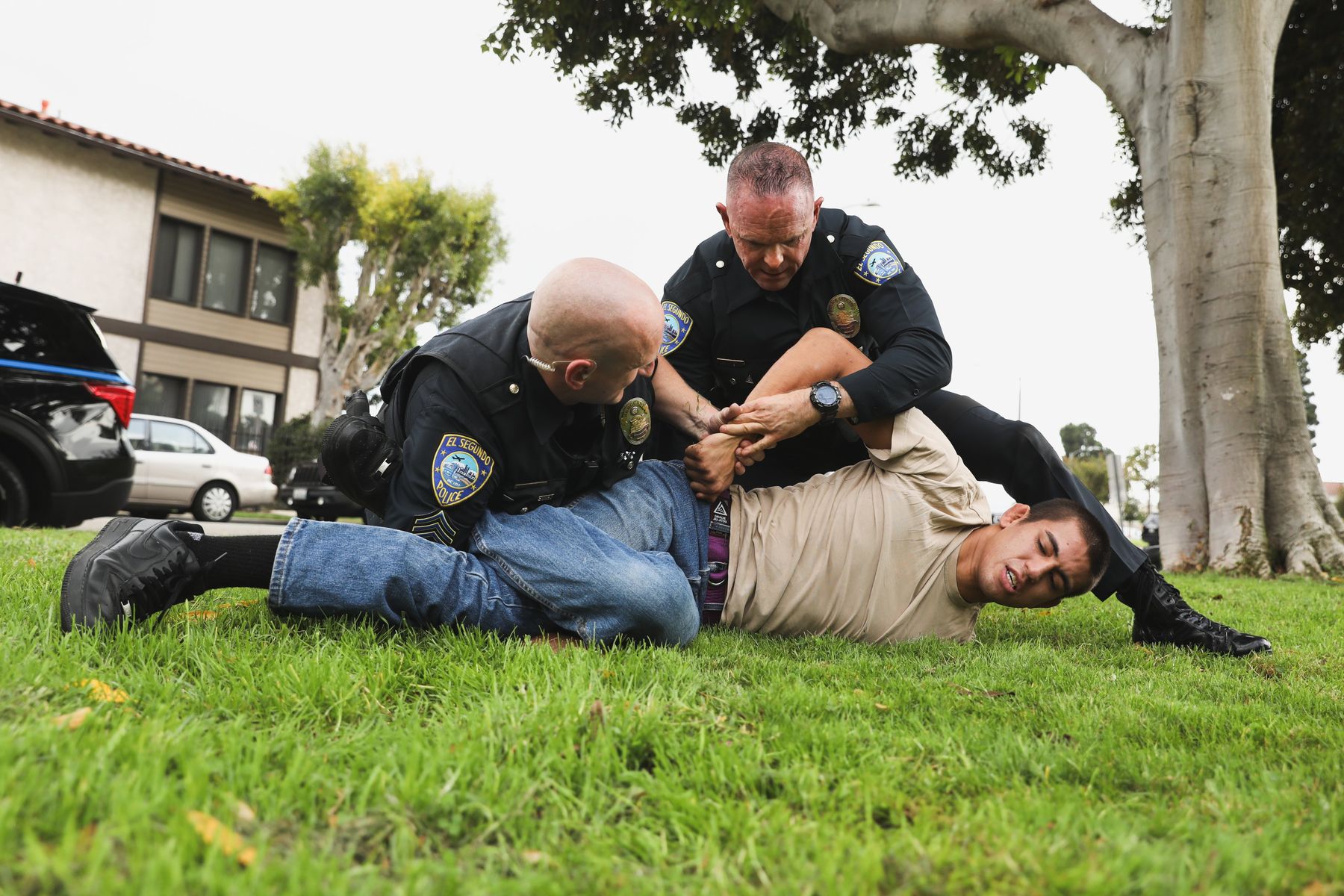
Children, older adults, pregnant people, neurodivergent people, and anyone with higher respiratory risk do not have spare capacity for a chest-down struggle. Weight on the torso, a hidden face, and pain used as a shortcut all land harder on them.
The lack of control makes it worse. When staff cannot see the hands, the face, or the airway, they press harder to feel finished. That is the moment a vulnerable person is most likely to be injured, and the moment the organization is least able to explain what happened.
Prone is not a neutral default. For these populations it is the wrong position: it hides the person you most need to monitor, and it trades breathing for a feeling of control that is not actually there yet.
If establishing control early makes sense to you, start with a conversation.
We will talk through where your current sequence leaves control unfinished, and whether SafeWrap belongs in the training plan.