
SafeWrap
A complete system, not a single hold.
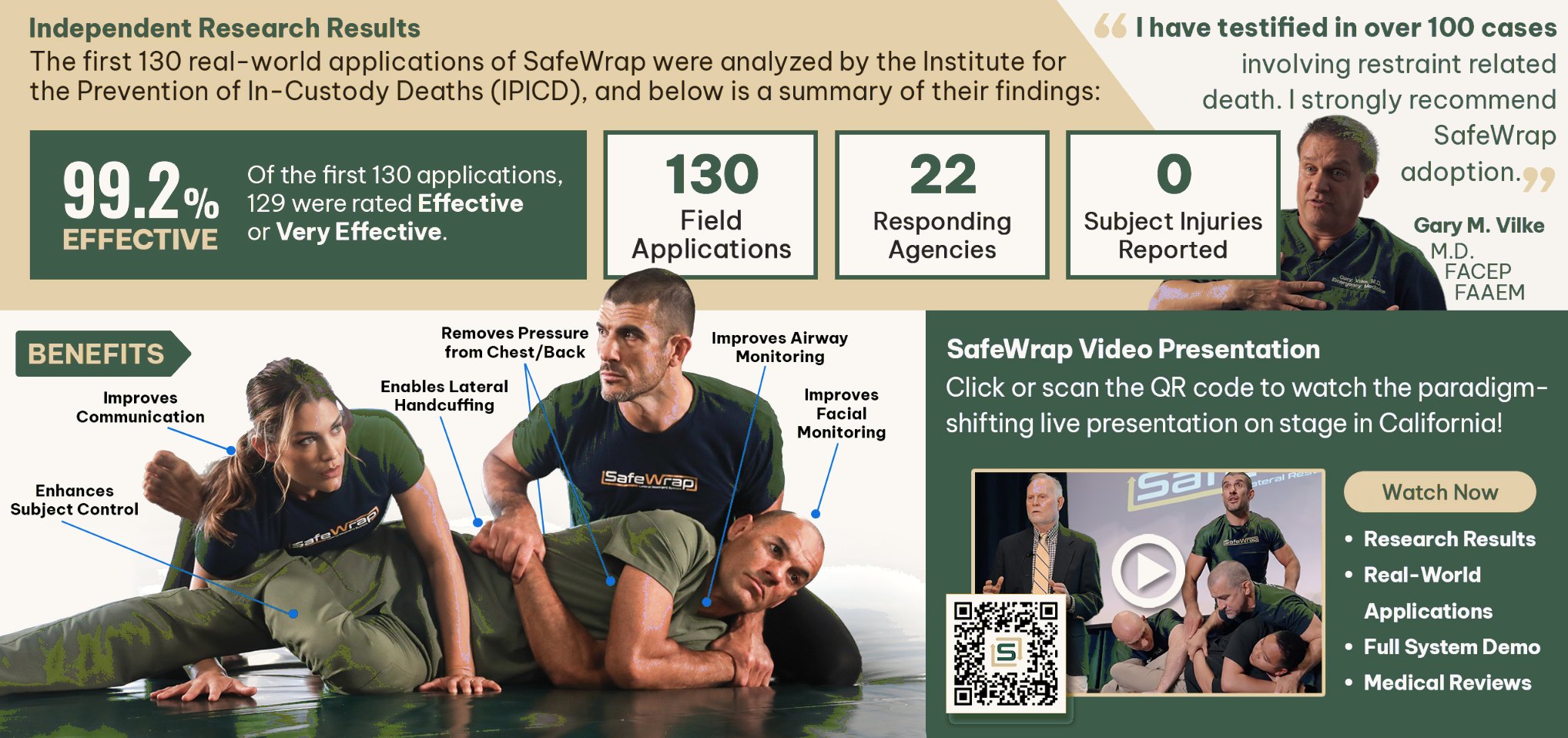
SafeWrap is not a single technique—it is a complete system of control that can be applied from almost any position during a physical encounter. Once staff master the two foundational skills of Crossover Arm Control and Crossover Leg Control, the rest of the system becomes clear, consistent, and usable under pressure. The result is calmer interventions, better outcomes, and staff who stay in control instead of reacting.
Think of SafeWrap as a shared language of control, once learned, any two certified personnel can work together, even if they have never trained side by side, to efficiently and safely restrain a subject.
01
De-escalation
Talk comes first. In a crisis, staff are taught to lower the intensity and avoid a physical intervention when that is still safe.Communication and de-escalation continue through each step of the process.
02
SafeWrap
When talk is not enough, the hold itself is lateral. The grips are built to keep the person from turning face-down, so escape is harder and the face stays available.
03
SafeDown
Going to the ground is where people get hurt. Teamwork and technique are what keep the descent controlled.
04
Restraint procedures
The system does not stop at the hold. It includes straightforward ways to handcuff, to use four-point restraint, and to maintain comfortable control for extended periods of time if needed.
05
Solo survival
If someone is attacked while alone, the aim is to stay safe until a second person arrives. Not to finish the incident by themselves.
Where to go next.
This page is the map. The problem is why a prone-only position leaves control unfinished. The solution is how the lateral position puts control in place early.
If this sounds like the right fit, request a discovery conversation.
Tell us the organization and who would be in the room. We will talk through whether this system belongs in the training plan.